October 28, 2026
|
5 min read


Blazingly fast way to build, track and deploy your models!
Barndoor is built around a clear thesis: as enterprises deploy many autonomous agents, they need a single place to control what those agents are allowed to do. Its strengths:
The founding team’s API-management pedigree shows — this is a governance product built by people who understand control planes. The open questions are maturity and scope.
A control plane that sits in front of your agents is load-bearing infrastructure, so the criteria that matter are the ones you discover in production, not in a demo.
TrueFoundry is an enterprise AI gateway and control plane that governs the full agent stack — the models agents call, the tools and MCP servers they reach, and the policies, budgets and audit around both — from one plane you can run as SaaS, in your VPC, on-prem, or fully air-gapped.
That scope is the core difference from Barndoor. Barndoor governs agent access; TrueFoundry does that and adds LLM routing across providers, per-team budget enforcement, a cross-provider cost ledger, and a first-class MCP registry with authentication and identity propagation. It is consistently ranked among the best MCP gateways and sits alongside the broader MCP security tooling enterprises standardize on.
Top Features:
Why it’s a Barndoor alternative: Barndoor governs what agents can do; TrueFoundry governs the whole stack — models, tools and MCP — and runs inside your network. For enterprises that need maturity, model governance and self-hosting alongside agent access control, it is the more complete plane. See the definitive guide to AI gateways for the full landscape.
Mintive is a governance-first MCP platform aimed at IT, security and AI-operations teams. It offers SCIM-driven Virtual MCPs, Agent Bundles with per-agent identity, three-layer guardrails and audit logs, under SOC 2 Type II controls, SaaS-first with VPC or self-hosted deployment on request.
Like Barndoor it centers central control, but it is purpose-built around MCP and treats agents as governed, identity-bearing entities.
Top Features:
Why it’s a Barndoor alternative: Mintive delivers the same central-governance promise with deeper, MCP-native primitives. See our TrueFoundry vs MintMCP comparison for how governance-first gateways differ.
RunLayer is a security-first MCP gateway with an endpoint agent. It authenticates, authorizes, scans and logs every MCP request, and adds laptop-level reach that most gateways lack. Backed by Khosla and Felicis with MCP’s co-creator as an advisor, it has moved fast on the security angle.
Its ToolGuard (scanning tool definitions and outputs, mapped to MITRE ATLAS), AgentGuard (session-level analysis) and AI Watch (endpoint inventory via MDM) make it strong where the risk is adversarial tools and shadow AI.
Top Features:
Why it’s a Barndoor alternative: RunLayer goes deeper on the security and endpoint side than Barndoor’s access-control focus. Note it is anchored to single-tenant AWS and its LLM gateway is still early access. See our RunLayer vs TrueFoundry comparison.
Speakeasy offers a hybrid MCP gateway inside a broader AI control plane. Its distinctive angle is generating MCP servers directly from your API contracts, with directory-native identity for both people and agents and detection rules that can be replayed against live sessions.
For teams that already maintain OpenAPI specs, turning those into governed MCP servers automatically is a meaningful shortcut.
Top Features:
Why it’s a Barndoor alternative: Speakeasy pairs agent governance with contract-driven MCP server generation — a more build-oriented path than Barndoor’s pure control plane.
Kong extends its established API-management platform to model and MCP traffic. For organizations already running Kong as their API gateway, consolidating agent, model and MCP traffic onto one familiar control plane is attractive.
It brings mature gateway operations — rate limiting, auth, observability — though its MCP Registry is still in tech preview.
Top Features:
Why it’s a Barndoor alternative: Kong offers enterprise-grade gateway maturity Barndoor doesn’t yet have, if you can accept an evolving MCP feature set. See our Kong AI alternatives guide for trade-offs.
Composio approaches agents from the integration side: 1,500+ toolkits, 50,000+ tools, managed OAuth and a single MCP endpoint behind a developer-friendly SDK. Where Barndoor governs access, Composio maximizes breadth and developer speed.
It is SOC 2 Type II and ISO 27001 certified, though its tiers are managed SaaS with no listed self-hosted option.
Top Features:
Why it’s a Barndoor alternative: If your real gap is integration breadth and developer velocity rather than access governance, Composio is the opposite end of the spectrum from Barndoor.
Barndoor is a promising early control plane. If you need production maturity, model governance, and the option to run inside your own network today, the platforms above cover those gaps.
Barndoor is an interesting bet on agent access governance from a team that knows control planes. For many enterprises, though, the requirement is broader than access control alone: govern the models too, run it where your data lives, and build on a platform with a production track record. For that complete case, TrueFoundry is the strongest alternative — with Mintive, RunLayer, Speakeasy, Kong and Composio covering narrower needs.
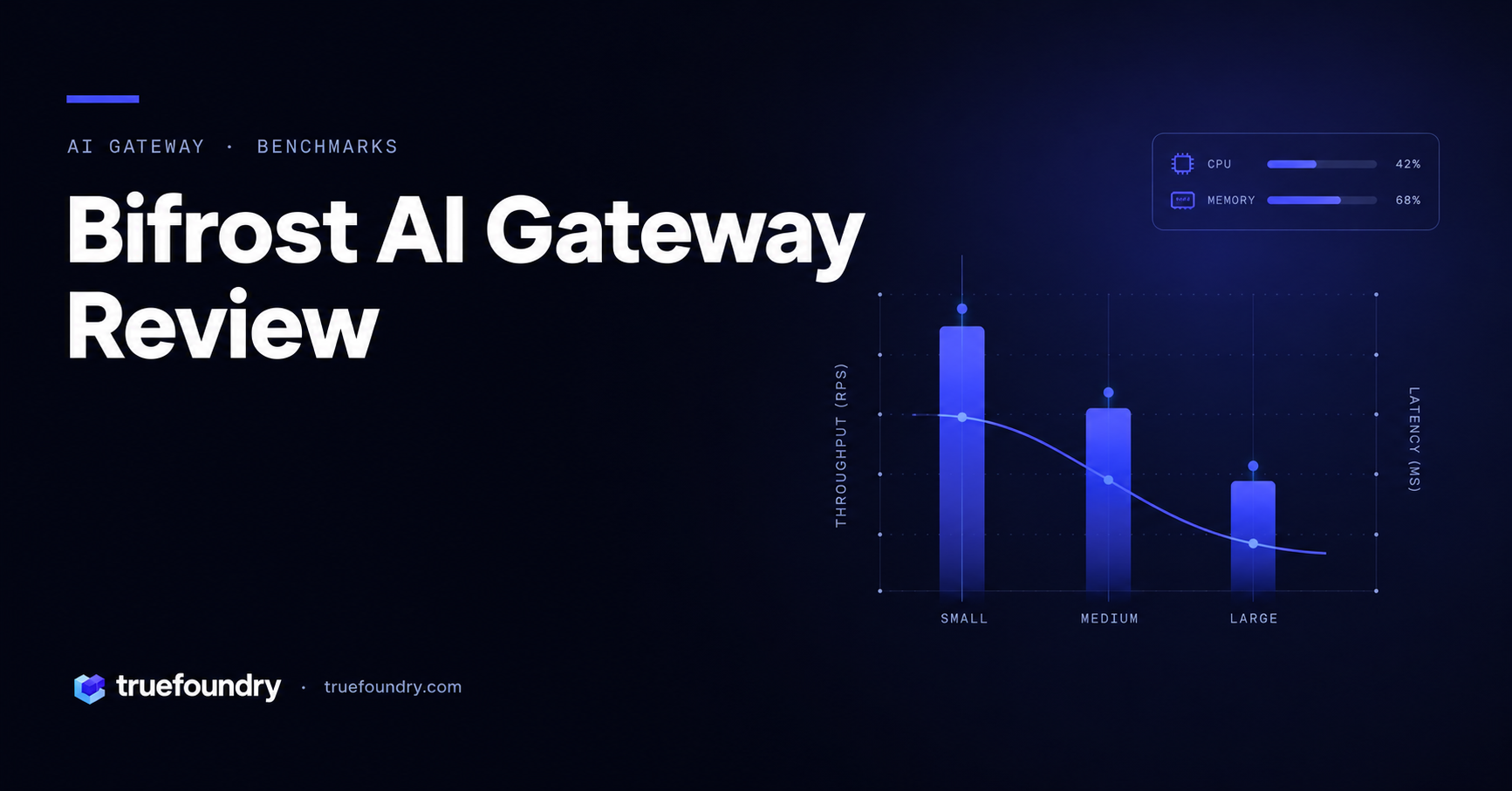
TrueFoundry AI Gateway delivers ~3–4 ms latency, handles 350+ RPS on 1 vCPU, scales horizontally with ease, and is production-ready, while LiteLLM suffers from high latency, struggles beyond moderate RPS, lacks built-in scaling, and is best for light or prototype workloads.


For enterprises that need a complete, self-hostable control plane governing models, agents and MCP together, TrueFoundry is the strongest fit. For MCP-native central governance, Mintive; for deep security and endpoint reach, RunLayer.
Barndoor is a control plane for agentic AI. It provides granular agent access controls, visibility (telemetry and audit), and request-level policy enforcement so IT and security teams can govern what agents can see and do from one place.
Common reasons include Barndoor’s early-stage maturity, its focus on access governance rather than model routing and cost control, unproven self-hosted/air-gapped deployment, and the depth of MCP support and integrations relative to more established platforms.
Barndoor focuses on agent access and policy, not model routing or spend. Teams that also need to govern which LLMs agents call — with fallbacks and budgets — typically pair it with, or replace it by, an AI gateway like TrueFoundry.
Barndoor is a credible seed-stage product with a strong founding team, but it is early. Whether it is enterprise-ready for you depends on your requirements around deployment location, maturity, model governance and compliance.



The latest news, articles, and resources sent to your inbox