


.webp)
October 24, 2026
|
5 min read


Blazingly fast way to build, track and deploy your models!
Every request that passes through an AI gateway carries something worth protecting: a customer's question, a snippet of internal code, a record pulled from a database to ground a RAG pipeline. Where that data goes, whether it touches the public internet, whether it gets logged somewhere by default, and who holds the encryption keys are architecture decisions, not afterthoughts you configure later. Get them wrong and you've built a data exfiltration path into your own AI infrastructure.
We compared three gateways specifically on secure data routing: TrueFoundry, Vercel AI Gateway, and Cloudflare AI Gateway. Each takes a different approach, private cloud connectivity for a serverless-first platform, edge-network zero trust, and VPC-first deployment, and each is worth understanding on its own terms before picking one for a production workload that handles sensitive data.
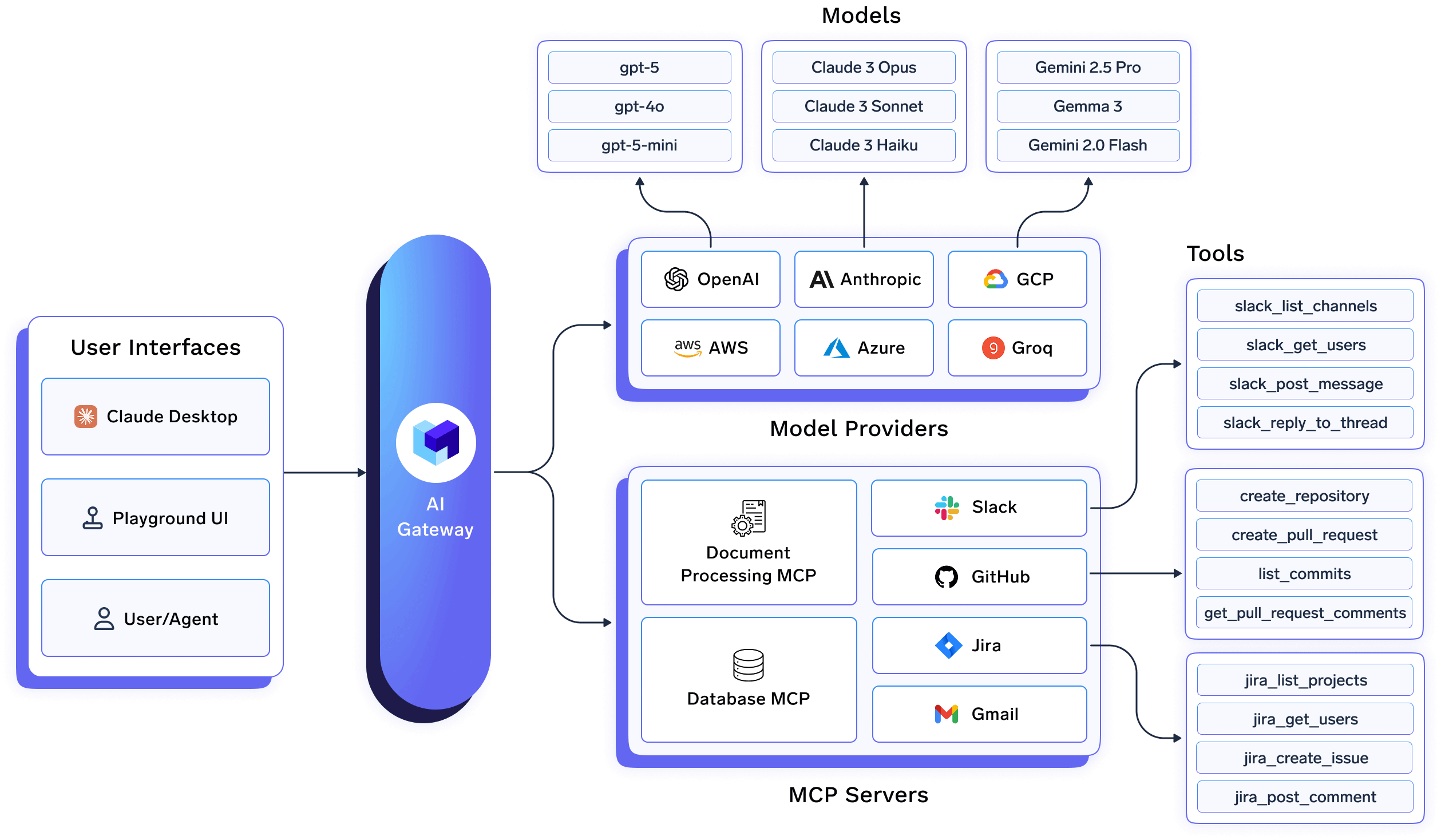
TrueFoundry's AI gateway is designed for organizations that need flexible deployment without compromising security. It can be deployed as a managed SaaS offering or within your own infrastructure including a private VPC, on-premises, hybrid, or air-gapped environments. For self-hosted deployments, the compute plane establishes an outbound-only WebSocket connection to the control plane, eliminating the need to expose inbound ports.
For organizations that require maximum control, self-hosted deployments use an outbound-only connection between the compute plane and control plane, eliminating the need to expose inbound ports or make firewall changes. Regardless of the deployment model, AI traffic is encrypted both in transit and at rest, helping organizations meet enterprise security requirements.
On the data-inspection side, built-in PII detection uses contextual understanding rather than simple pattern matching, and can automatically redact sensitive identifiers in mutate mode so a request continues with the sensitive data stripped rather than failing outright. For regulated workloads that need more, integrations with TrojAI (credit card blocking), Pillar Security (SSN and prompt-injection blocking), and Verra (managed governance for regulated industries) plug into the same gateway architecture. Because routing, guardrails, and encryption apply the same way regardless of which of the 1,000+ supported LLMs a request is headed to, the security posture doesn't change depending on which provider you're routing to that day.
Key highlights
Best for: teams routing to multiple model providers who need the gateway itself running inside their own network, with a consistent security and guardrail policy regardless of which provider handles a given request.
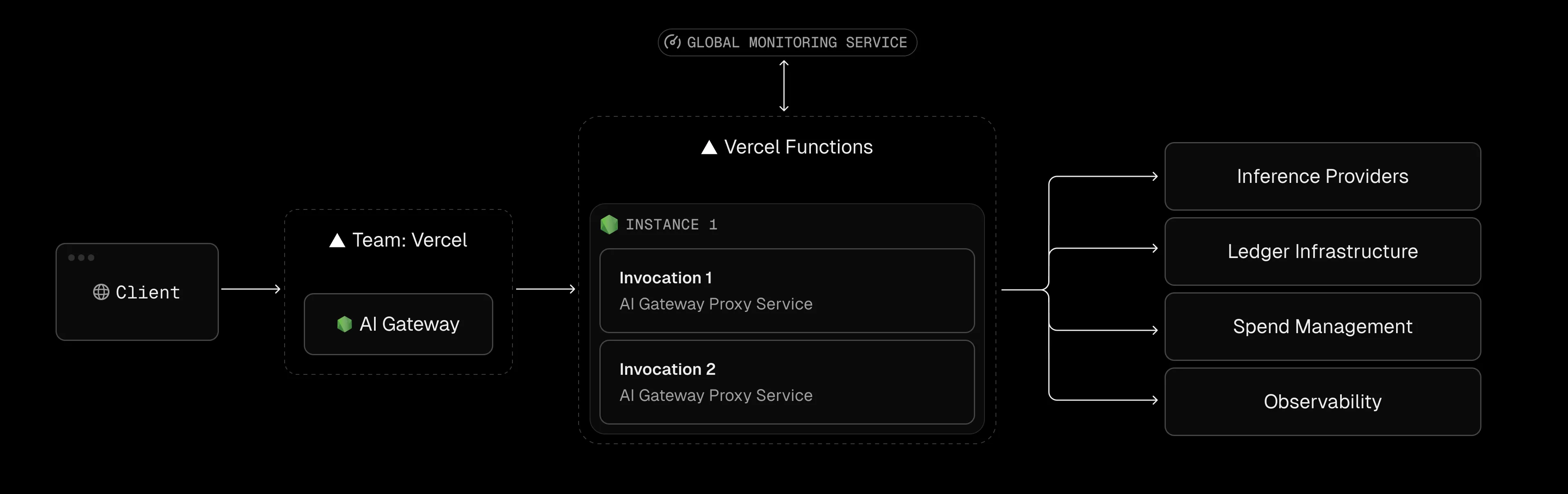
Vercel AI Gateway's core pitch is a unified API across hundreds of models with no token markup, and its secure-routing story is built around Secure Compute, which lets traffic to your own cloud resources stay off the public internet. VPC peering lets you configure routing so traffic from Vercel's CIDR block reaches your AWS environment directly, and traffic sent over that VPC peering connection doesn't incur data transfer charges, a detail that matters once you're routing meaningful production volume.
The tradeoff is scope, similar to any platform-specific gateway. Secure Compute and VPC peering are built around Vercel's own serverless deployment model, so the private-routing guarantees are strongest for teams already deploying their application layer on Vercel; using it purely as a standalone gateway in front of infrastructure hosted elsewhere means less of that native connectivity advantage applies.
Best for: teams already building on Vercel who want private, low-cost connectivity from their serverless app layer to their own cloud resources alongside unified model routing.
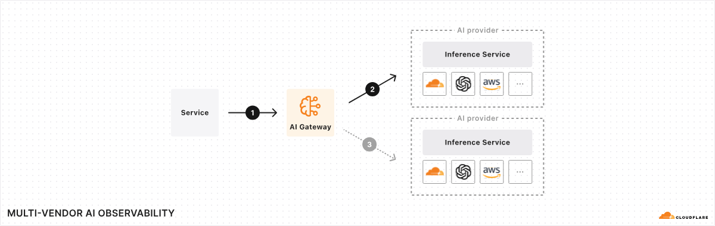
Cloudflare's approach routes AI traffic through the same zero-trust architecture it applies to workforce and machine-to-machine traffic generally. AI Gateway includes DLP scanning on prompts and responses through Cloudflare's Firewall, letting teams select which DLP profiles to block or flag, and Log Explorer lets security analysts trace usage spikes, search for blocked attempts to capture personal data, or reconstruct a specific user's interactions with an unsanctioned model. The Data Localization Suite can restrict where data is stored to a specific geographic region, and Cloudflare One's secure web gateway can block unauthorized AI applications entirely at the network level.
This is a strong, genuinely edge-native security model, and the core caching, rate limiting, and DLP features are free with a Cloudflare account. The scope is different from a VPC-deployed gateway, though: security here is enforced at Cloudflare's network edge rather than inside your own private network, which is the right fit for some architectures and a meaningful distinction for others.
Best for: teams already invested in Cloudflare's zero-trust ecosystem who want DLP and data localization enforced at the network edge without standing up separate infrastructure.
Choose TrueFoundry if: you route to multiple model providers and need the gateway itself deployed inside your own VPC or on-prem environment, with one consistent security and PII policy regardless of provider.
Choose Vercel AI Gateway if: your application layer already runs on Vercel and you want private VPC peering to your own cloud resources alongside unified, no-markup model routing.
Choose Cloudflare AI Gateway if: you're already using Cloudflare's zero-trust stack and want DLP scanning and data localization enforced at the network edge for free.
As enterprises scale AI into production, secure data routing has become a foundational requirement rather than an optional feature. An AI gateway should not only simplify access to multiple LLM providers but also ensure that sensitive prompts, customer data, and business-critical information are protected through centralized security policies, identity controls, and auditability.
While platforms like Vercel AI Gateway and Cloudflare AI Gateway offer strong managed routing capabilities, organizations with stricter security and compliance requirements often need greater control over deployment, governance, and data handling.
TrueFoundry stands out by combining secure AI traffic routing with enterprise features such as private deployments, contextual PII detection, policy enforcement, comprehensive observability, and support for over 1,000 LLMs through a unified control plane. For organizations operating in regulated industries or managing mission-critical AI workloads, it provides the flexibility and governance needed to deploy AI securely at scale.
If you're evaluating AI gateways in 2026, prioritize solutions that align with your security posture, compliance obligations, and long-term AI strategy, not just those that simplify API integrations.
Q: What's the best AI gateway for secure data routing?
A: It depends on where your infrastructure already lives. TrueFoundry fits teams that need the gateway deployed inside their own VPC or on-prem environment with consistent security across every model provider. AWS Bedrock fits teams already running natively on AWS. Cloudflare AI Gateway fits teams already using Cloudflare's zero-trust ecosystem.
Q: Does AWS Bedrock store my prompts and responses by default?
A: No. By default, Bedrock does not persist prompts or model responses; inference data is processed transiently unless you explicitly enable model invocation logging.
Q: Can TrueFoundry's AI gateway run entirely inside my own network?
A: Yes. It deploys in your VPC, on-prem, air-gapped, or hybrid, with the compute plane using an outbound-only connection to the control plane, so no inbound ports need to open in your firewall.
Q: Is Cloudflare AI Gateway's DLP scanning free?
A: Yes, the core DLP scanning, caching, and rate limiting features are included with a Cloudflare account, with higher log volumes requiring a paid Workers plan.
Q: Does TrueFoundry support HIPAA and GDPR for secure routing of sensitive data?
A: Yes. The managed infrastructure carries SOC2 Type II, ISO 27001, GDPR, and HIPAA compliance, and the platform can deploy fully inside your own VPC or on-prem environment so sensitive data never has to leave your domain.
TrueFoundry AI Gateway delivers ~3–4 ms latency, handles 350+ RPS on 1 vCPU, scales horizontally with ease, and is production-ready, while LiteLLM suffers from high latency, struggles beyond moderate RPS, lacks built-in scaling, and is best for light or prototype workloads.






The latest news, articles, and resources sent to your inbox

.webp)

.png)
.png)
.png)
.png)
.png)
.png)
.png)
.png)
.png)
.png)
.png)


